Stainless construction
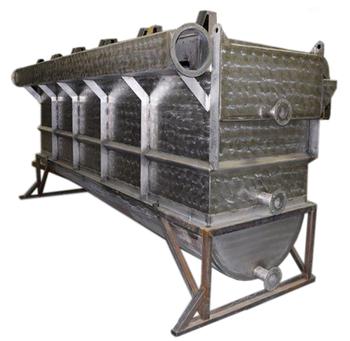
Stainless bodies and cathodic shell protection.
 CGS.MINING & EQUIPMENT
CGS / MINING EQUIPMENT
Explore the equipment behind your recovery process. Rotate the models, understand the design approach, and discuss your project with our team.
01 / PRECIOUS METAL RECOVERY
ELECTROWINNING CELLSModeled around your process. Sized around your recovery requirements.
CGS begins each job by mathematically modeling the solution entering the cell during every minute of its simulated operation.
The CGS elution and electrowinning model combines first principles with years of staff experience. It predicts the rate at which precious metals are desorbed from activated carbon and removed from pregnant solution, informing cell sizing and system design.
Drag to rotate · Pinch to zoom · Arrow keys to explore
3D model from CGS’s supplied equipment CAD. Configuration varies by project.
Stainless bodies and cathodic shell protection.
Equipment designed around CGS electrowinning requirements.
CGS’s in-cell washing approach avoids a separate wash bay and overhead crane.
02 / THERMAL SYSTEMS
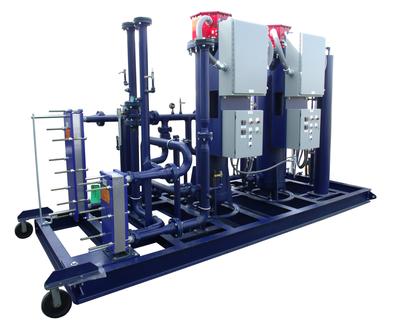
HEATER SKIDCGS heater skid technology recovers energy from the electrowinning circuit while maintaining the process temperature profile.
The CGS heater skid uses a third heat exchanger to recuperate energy from the electrowinning cells. The same temperature profile as the traditional pressure Zadra process can be maintained across the barren tank, elution vessel and electrowinning cells, with substantially lower immersion heater energy input.
CGS attributes the reduction primarily to eliminating energy losses through cooling water during the heating cycle.
Drag to rotate · Pinch to zoom · Arrow keys to explore
Illustrative model based on CGS heater skid renders and photography. Not a dimensional specification.
A CONTROLLED TEMPERATURE PROFILE
A traditional pressure Zadra circuit maintains the following temperatures. The CGS skid is designed to retain that profile while reducing energy input.
| Process stage | Temperature | Why control matters |
|---|---|---|
| Barren tank | 65°C | Higher temperatures increase cyanide destruction. |
| Elution vessel | 148.9°C | Lower temperatures lengthen elution cycles. |
| Electrowinning | 88°C | Lower temperatures reduce current efficiency and recovery; higher temperatures can cause cell vaporization. |
INDIRECT COOLING
A traditional Zadra process cools through flashing and cooling sprays inside the elution vessel, typically taking 1–2 hours. Calcium precipitation can plug vessel screens and reduce carbon activity. Rapid steam discharge also creates an operator hazard.
The CGS skid uses an oversized trim heat exchanger and a primary heat exchanger bypass line to cool indirectly. The described CGS sequence takes approximately 30 minutes:
The operator opens the cooling water valve to the trim heat exchanger, which has remained off during the heating cycle. Solution leaving the elution vessel is cooled by 100°F in a single pass.
The 300°F solution leaving the elution column is routed into the trim exchanger, cooled by 140°F and returned to the barren tank.
The 300°F solution in the elution column is displaced by 150°F solution from the barren tank. Indirect cooling avoids precipitation inside the elution column and venting steam to atmosphere.
03 / DESORPTION SYSTEMS
ADR / ELUTION PLANTSA modular approach to the recovery circuit.
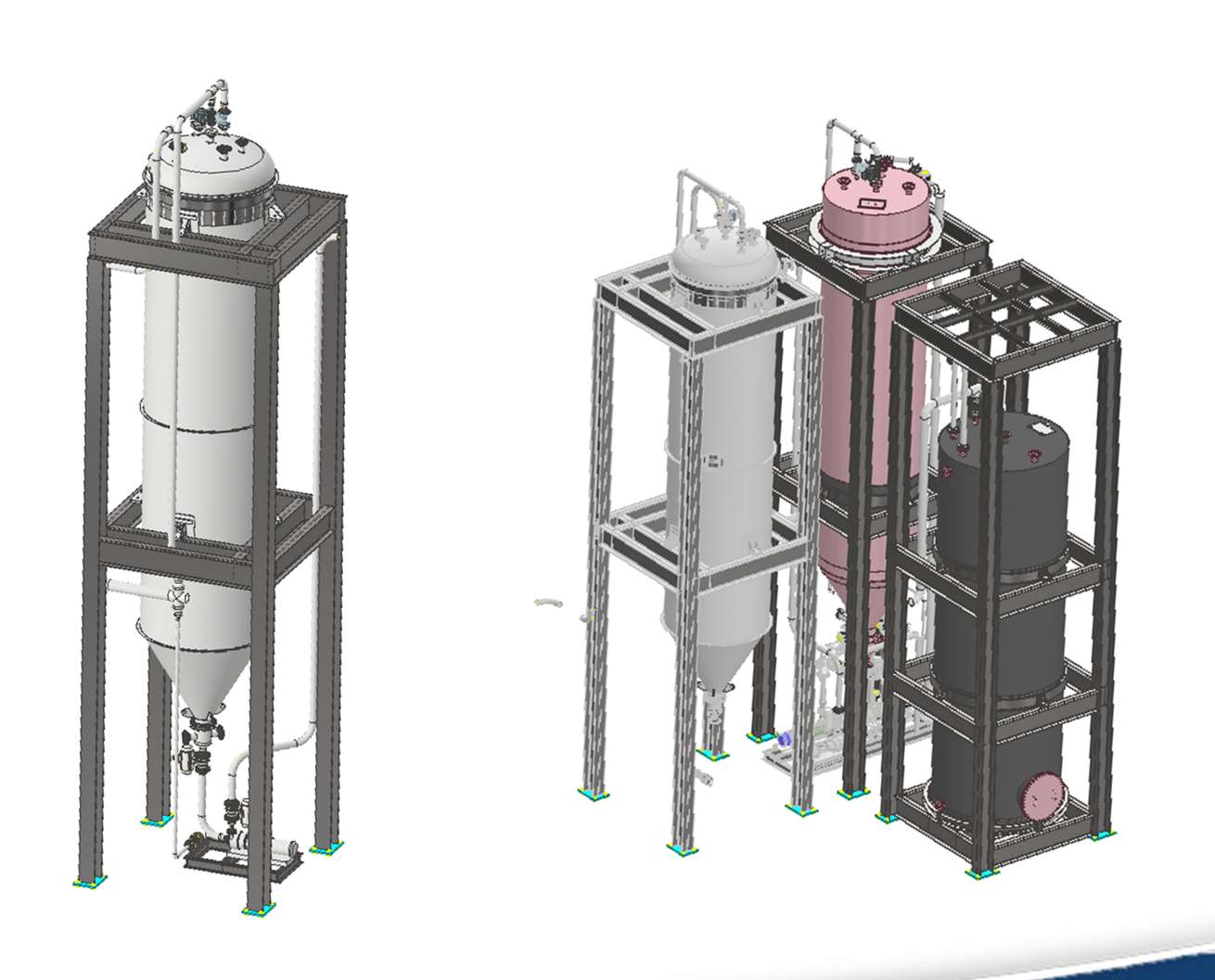
CGS elution design brings single-point control for heating and cooling and an approach designed to minimize cyanide consumption. Discuss vessel design, equipment integration and complete plant pricing with our team.
The MOD-BLOC approach uses common dimensions, standard connections and dimensions in even multiples to support integration and expansion.
Drag to rotate · Pinch to zoom · Arrow keys to explore
Illustrative model based on CGS elution equipment renders. Not a dimensional specification.
04 / CARBON REGENERATION
CARBON REGENERATION KILNEfficient, reliable regeneration with a focus on low oxygen ingress and minimal carbon attrition.
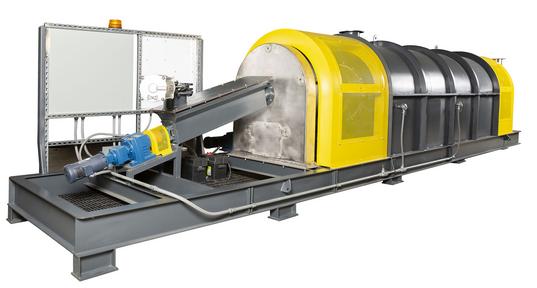
The CGS carbon regeneration kiln is designed to keep oxygen levels low, helping minimize carbon attrition during regeneration.
The CGS proprietary seal uses a wear-based system to maintain a proper seal throughout its operating life. Unlike a standard seal that can wear unevenly and allow increasing oxygen ingress, the CGS design accommodates wear over time.
When the seal reaches the end of its service life, its removable design makes replacement a matter of minutes rather than requiring a conventional tail-end rebuild.
Drag to rotate · Pinch to zoom · Arrow keys to explore
Illustrative model based on both supplied CGS kiln photographs. Not a dimensional specification.
A proprietary seal designed to maintain sealing performance and help minimize carbon attrition.
A removable seal design for quick replacement without a standard tail-end rebuild.
Insulation reduces power and fuel consumption. The exterior is designed to remain cool to the touch, reducing exposed hot-surface hazards in the ADR plant.
05 / MERRILL CROWE SYSTEMS
ZINC FEEDERA complete, easy-to-install skid for precious metal precipitation.
In a Merrill Crowe plant, zinc powder precipitates silver and gold from the cyanide process solution. Proper clarification keeps suspended solids to a minimum, while deaeration helps minimize zinc consumption and optimize precipitation.
Once the solution is clarified and deaerated, it is ready for zinc addition and precious metal precipitation.
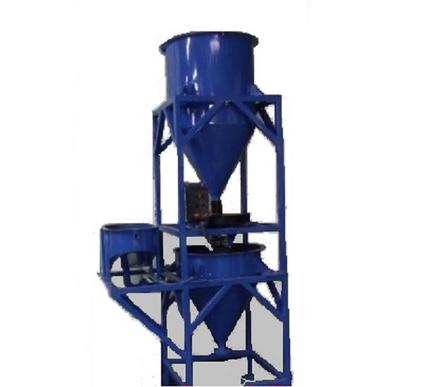
The CGS skid includes an appropriately sized hopper, head tank, mix cone, turntable, motor, control panel and variable-frequency drive (VFD) controls.
Drag to rotate · Pinch to zoom · Arrow keys to explore
Illustrative model based on the supplied CGS zinc feeder image. Not a dimensional specification.
Clarification and deaeration prepare the process solution for efficient zinc addition.
Hopper, head tank, mix cone, turntable and motor together in an easy-to-install system.
Control panel and VFD controls to support the zinc addition process.
LET’S DISCUSS YOUR PROCESS